Open Source Productboard Alternatives in 2026: 4 Tools

If you are considering an open source alternative to Productboard, first separate the job you need done. A public feedback board can collect requests and votes. Replacing Productboard's wider product-management workflow, including customer insight, prioritization, and roadmaps, is a bigger task.
Four names to assess are Fider, LogChimp, Quackback, and ClearFlask. The source review that surfaced this comparison was dated 28 August 2026, so treat its tool list as a point-in-time starting place, not a guarantee of current features or maintenance. Check each project's repository, release history, license, hosting instructions, and documentation before you commit.
The source review compares those four projects with Productboard and calls out capabilities the alternatives do not replace. The useful question is not just "Which one is free?" It is "Which parts of our product workflow will this tool handle, and what will remain elsewhere?"
The short answer
Fider, LogChimp, Quackback, and ClearFlask are candidates to investigate when your immediate need is open source customer feedback collection and request management. Do not assume any one of them is a complete Productboard replacement. Validate the specific capabilities your team relies on, especially how feedback connects to product decisions, roadmaps, delivery, and customer follow-up.
| Tool | Consider it if... | Confirm before choosing |
|---|---|---|
| Fider | You want to assess a feedback-board approach for collecting and discussing user requests. | Whether its current workflows cover your needs for request status, prioritization, roadmap communication, and integrations. |
| LogChimp | You want to evaluate an open source option for managing feedback and communicating product direction. | Which parts of your workflow it supports today, how active the project is, and what administration self-hosting requires. |
| Quackback | You want to test an open source feedback workflow with customers or users. | How it handles request grouping, votes, status updates, access controls, and the transition from feedback to planned work. |
| ClearFlask | You want another open source project to compare for product feedback and prioritization needs. | Its current release and hosting status, the license, and whether roadmap and communication features match your expectations. |
These descriptions are evaluation starting points, not feature guarantees. Open source projects change, and a feature listed in a past comparison may not be supported, maintained, or packaged the same way today.
Where these tools may fit
A focused feedback tool can be a good fit when a team mainly needs a place for customers to submit requests, see existing ideas, and signal interest. That can reduce duplicate requests and make demand easier to review.
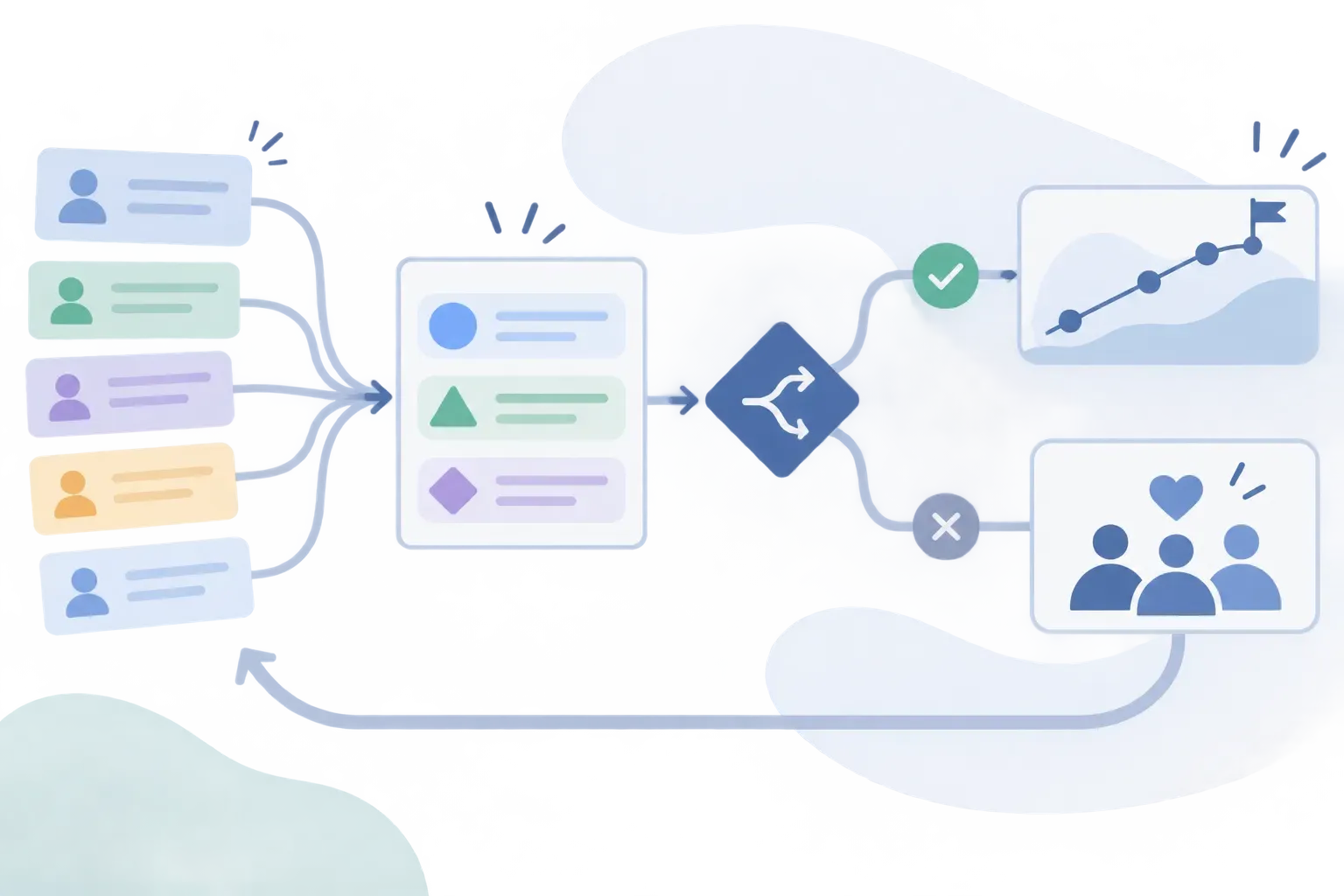
The limitation is what happens next. A request board does not automatically provide the complete system for interpreting customer evidence, deciding what to build, coordinating a roadmap, communicating a release, and checking whether the change helped. Some of those steps may be covered by a particular project, an integration, or your existing stack. Test them rather than inferring them from the word "roadmap" or from a feature list.
Fider
Assess Fider against your feedback-intake process. Can users find and add to an existing request? Can your team preserve the context behind a vote, such as the user's problem or account? What happens when a request is declined, delayed, or delivered?
If the tool handles the public feedback surface but not internal prioritization or follow-up, that may still be enough. Just account for the separate systems and manual steps needed to make a product decision.
LogChimp
Use LogChimp as a candidate to test against the full path from incoming feedback to a customer-facing update. During evaluation, establish which stages are supported directly and which depend on other tools or manual work.
Check current project activity and deployment instructions as carefully as the product workflow. An open source repository gives you access to the code, but the team still needs to understand how updates, backups, security, and ongoing maintenance will be handled.
Quackback
Test Quackback with real requests from different users, not only sample ideas. Check whether the team can combine similar reports without losing their separate use cases, and whether users can understand what happened after a request received votes.
This matters because vote counts are evidence of interest, not a complete prioritization method. A product decision may also depend on customer context, strategic fit, effort, risk, and how many users face the underlying problem.
ClearFlask
Include ClearFlask in a side-by-side evaluation if its current scope appears to match your feedback workflow. Start with the repository and current documentation, then run a practical test: submit requests, organize related feedback, record a decision, and communicate the outcome.
Do not treat a roadmap display or status label as proof that the full planning workflow is covered. Confirm how the team will keep internal plans useful and customer-facing updates accurate.
What open source alternatives may not replace
Productboard is used for more than collecting feature requests. Depending on your team's setup, its value may include bringing customer insight into product decisions, organizing priorities, and sharing roadmap direction. A feedback portal can cover one part of that process without replacing the rest.
Before switching, list the jobs Productboard handles for you today:
- Feedback context: Can you retain the source, user, account, and problem behind a request?
- Synthesis: Can you identify related feedback and recurring needs without reducing them to a vote total?
- Prioritization: Can the team record why work was selected, deferred, or rejected?
- Roadmaps: Can you plan work and share the appropriate level of detail with internal or external audiences?
- Delivery handoff: Can a decision reach the system where product and engineering work is coordinated?
- Release communication: Can users learn what changed and whether it addresses their request?
- Outcome tracking: Can you tell whether the intended users discovered and adopted the change?
For each item, mark whether the alternative supports it natively, supports it through an integration, or leaves it to another tool. That gap list will show whether you are replacing Productboard or replacing only its feedback collection layer.
For a broader comparison of Productboard competitors across prioritization workflows, see six Productboard alternatives for prioritization. If the core problem is the work after feedback arrives, this guide to customer feedback management for startup product teams offers a workflow-focused way to assess it.
How to choose among the four
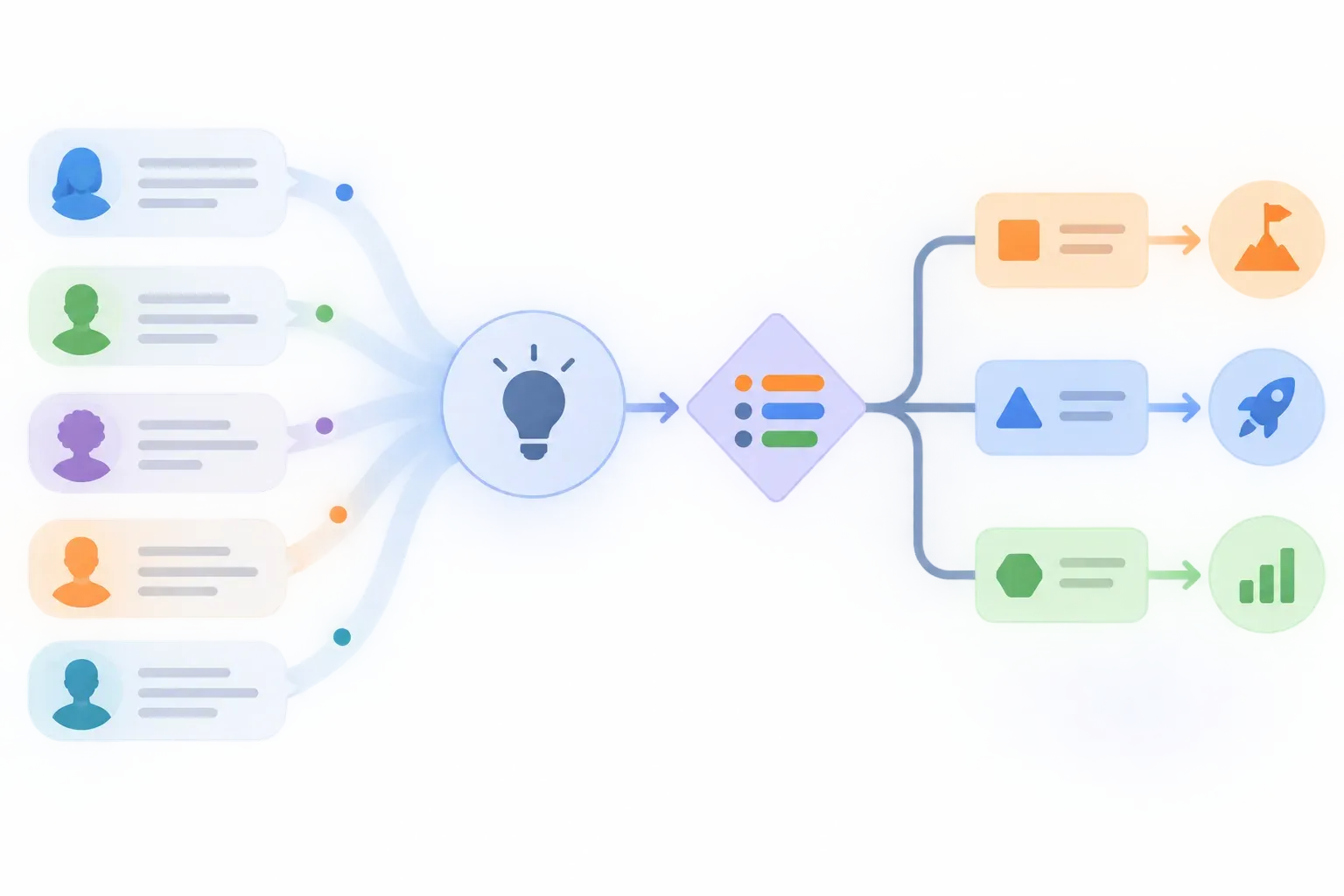
Run the same small test in each finalist. Use one real product request and follow it through the tool.
- Submit feedback from more than one source. Check what information survives when a user submits a request and when a teammate adds feedback from a conversation.
- Connect duplicates without flattening context. Confirm that related reports can be grouped while preserving why different users need the change.
- Record a decision. Look for a clear way to capture the rationale and status, including when the team decides not to build something.
- Follow the decision into planning. Check whether the roadmap or delivery system receives enough context to make the work actionable.
- Close the loop. See whether the team can tell affected users what happened, then measure whether the change reached the intended users.
- Estimate the operating cost. Include hosting, upgrades, backups, access controls, integrations, and the staff time needed to maintain the workflow.
A tool that covers fewer jobs may still be the right choice if it does its core job well and your existing systems handle the rest. A self-hosted option is not automatically lower effort or lower total cost. Compare the price of the software with the time spent running it and moving information between systems.
Is Managani an open source Productboard alternative?
Managani is designed around a connected product-growth workflow: feedback, roadmaps, changelogs, onboarding, in-app messaging, analytics, and adoption tracking. That makes it relevant when the gap is not just collecting feedback, but carrying product context through decisions and into post-release follow-up.
However, Managani's current product context describes a managed beta. Its open source release and self-hosting option are planned for after beta, so it should not be treated as an available open source replacement today. Check the open source status page for the current position.
Frequently asked questions
Are Fider, LogChimp, Quackback, and ClearFlask free Productboard replacements?
They are open source candidates to evaluate, but "free" does not mean cost-free to operate, and none should be assumed to replace every Productboard workflow. Verify each project's current license, feature set, maintenance activity, hosting requirements, and integration needs.
Which open source alternative is best?
The best fit depends on the job you need covered. Compare the four using the same real workflow, from feedback submission through decision and customer follow-up. Choose based on what the project supports now and what your team can maintain, rather than its feature-page labels alone.
What should I check before self-hosting?
Confirm the license, deployment requirements, upgrade process, backup and recovery options, security practices, and project activity. Also identify who will own maintenance and how customer data will move if you later switch tools.
The practical choice is the tool that fits the work you need to do and the team you have to maintain it. If you only need a feedback portal, a focused project may be enough. If you rely on Productboard for insight, prioritization, and roadmap communication, test those parts explicitly and plan for whatever the alternative does not cover.