Intercom Pricing 2026: Is the Cost Worth It for Your Team?

Intercom can be worth paying for when your team needs a shared customer-support workflow and will use the capabilities included in its plan. The harder question is whether the full cost matches the work you need done, especially if your team also needs product feedback, roadmaps, release communication, onboarding, or adoption tracking.
Intercom's current prices, plan limits, and usage terms can change. The supplied Intercom pricing review from Featurebase is a useful starting point, but confirm the latest figures and terms directly with Intercom before making a decision. Don't base the purchase on a headline price alone: compare the plan and expected usage that fit your team's actual workflow.
What should you check in Intercom's pricing?
For a fair estimate, look beyond the displayed starting price. Check the current pricing page and proposal for:
- The billing unit: Confirm what is billed per seat, per user, per conversation, or by another usage measure. Ask how that unit is counted.
- Included limits: Check which limits apply to your expected volume and what happens if you exceed them.
- Plan-specific features: Identify which tools your team needs, then confirm the plan that includes them. Don't assume every feature is available at the lowest tier.
- Automation and AI terms: If you plan to use AI or automated workflows, clarify whether those capabilities have separate usage rules, caps, or charges.
- Contract terms: Confirm billing frequency, minimum commitments, renewal terms, and what happens if your needs change.
- The work around the tool: Include setup, migration, integrations, and time spent maintaining workflows in your comparison.
Ask for a quote based on your expected team size and usage, not an idealized trial period. A sales conversation is also a good time to request examples of how the bill would change if volume grows or usage crosses a plan limit.
Is Intercom worth it?
Intercom is more likely to be worth the cost when customer conversations are a central part of your operation and the team will actively use its support workflows. A tool can justify a higher price if it helps agents handle conversations effectively and gives the business the capabilities it needs without adding avoidable work elsewhere.
It is harder to justify if you mainly need a simple way to answer a low volume of customer questions, or if the plan includes capabilities your team won't use. It may also be a poor overall fit if you are buying it for support but still need several other products to manage product feedback, roadmap decisions, release updates, and feature adoption.
A useful decision isn't "Is Intercom expensive?" in isolation. It's: What recurring work does Intercom cover, what will remain outside it, and what will the complete setup cost?

Compare the complete workflow, not just the inbox
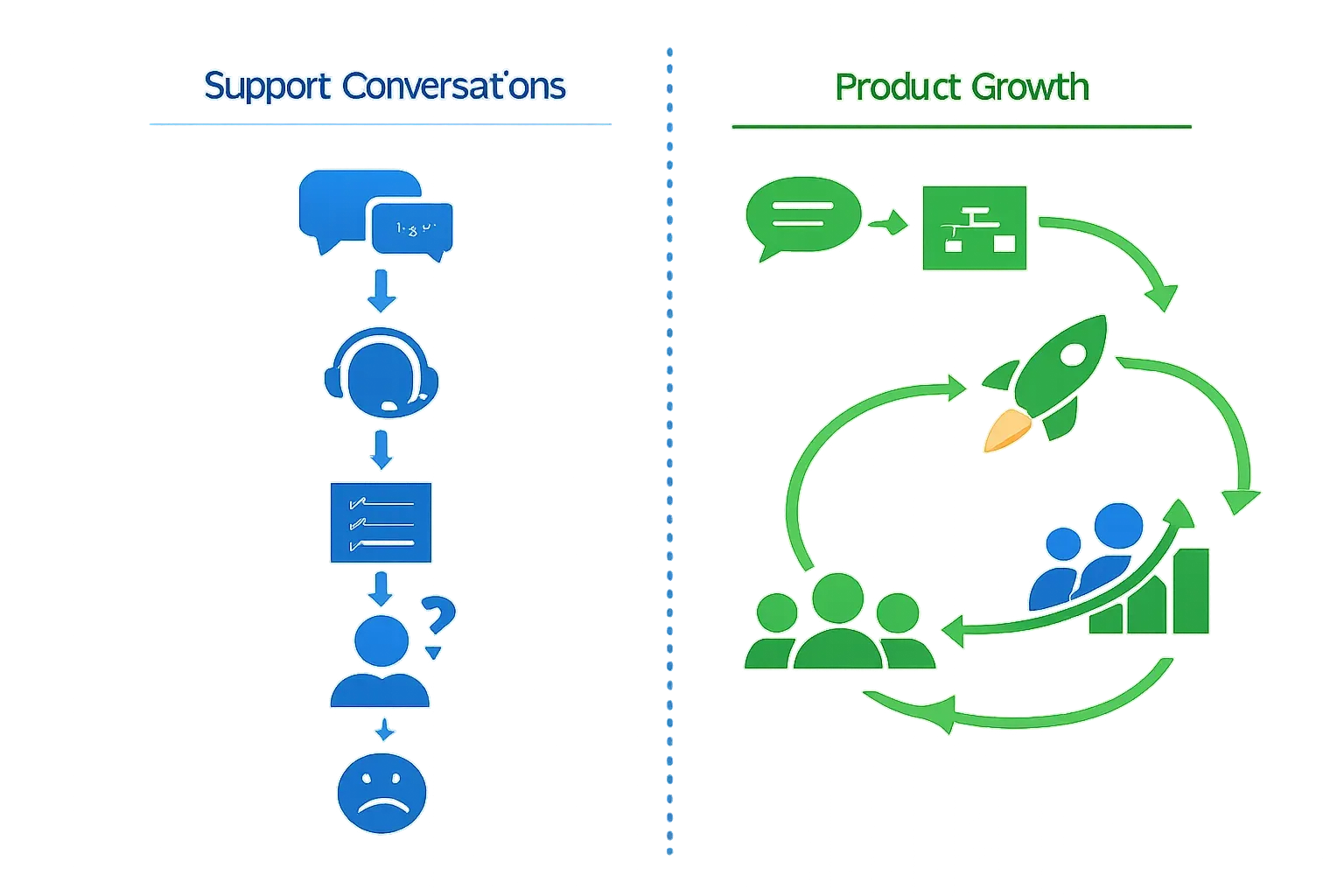
A support inbox solves a different problem from a product-growth workflow. Support teams need to respond to customer questions. Product teams also need to recognize repeated requests, decide what to build, communicate changes, and see whether customers adopt them.
Map one real customer issue through your current process:
- A customer reports a problem or requests a capability.
- The team connects that report to similar feedback and assesses its importance.
- The product team records a decision and, if appropriate, adds work to the roadmap.
- The team announces the release or explains the change to affected users.
- Users receive guidance if they need help finding or using the feature.
- The team checks whether the change addressed the problem and whether users adopted it.
Then identify which steps Intercom supports for your team, which require other tools, and where people copy context manually. That gives you a better cost comparison than lining up monthly prices without considering what each product replaces.
For a practical way to evaluate those handoffs, see how to test product-growth tools before you buy. If feedback capture and decision-making are part of the gap, this guide explains when a standalone feedback inbox stops being enough.
Where Managani fits, and where it doesn't
Managani is a product experience platform for lean SaaS teams. It connects feedback, roadmaps, changelogs, onboarding, in-app messaging, analytics, and adoption tracking in one workspace. That makes it relevant when a team's challenge goes beyond answering support conversations and includes carrying customer context through product decisions and post-release follow-up.
It should not be treated as a like-for-like replacement for Intercom based on the information available here. The supplied product context does not establish that Managani includes the same support-inbox capabilities, AI features, or plan structure. If your primary requirement is an established support operation, test Intercom and other support products against that need directly.
If your main problem is that customer signals get lost between feedback, roadmap planning, release communication, and adoption, compare tools on that workflow instead. What a product OS is and how it supports SaaS product growth explains the broader approach. Managani is currently available as a managed beta with access reviewed weekly, so confirm availability and current terms before evaluating it for your team.
| Your main requirement | What to prioritize |
|---|---|
| Handling customer support conversations | Inbox workflow, team collaboration, routing, and the plan's current usage terms |
| Connecting customer requests to product decisions | Feedback capture, request grouping, prioritization, and roadmap links |
| Informing customers about product changes | Changelog or public updates and a clear way to reach affected users |
| Helping users adopt new features | In-app guidance, messaging, and tracking of meaningful product actions |
| Reducing separate product-growth tools | Whether feedback, roadmaps, releases, onboarding, and adoption work connect in one workflow |
A quick way to decide
Before committing, run a short evaluation with a real example rather than a polished demo scenario:
- Choose a typical customer conversation. Follow it from first contact through resolution.
- Try a product request as well. See whether the team can preserve its context, connect it to related requests, and record a product decision.
- Check what happens after release. Can the team announce the change, guide users, and measure whether they used it?
- Price the setup you will actually run. Include the required plan, expected usage, adjacent tools, and implementation work.
- Ask about the next stage. Confirm how pricing and limits change if your team, conversation volume, or usage grows.
If Intercom covers the support work you need at a cost that fits your usage, paying for it can make sense. If the main expense is supporting a broader product workflow that still depends on several disconnected tools, compare the cost and handoffs across the whole stack before deciding.
Frequently asked questions
How much does Intercom cost in 2026?
Check Intercom's current pricing and request a quote based on your team and expected usage. Prices, plan limits, and billing terms can change, so verify the details directly before purchasing. A third-party review, such as Featurebase's Intercom pricing overview, can provide another reference point, but it should not replace current vendor terms.
Is Intercom worth it for a small SaaS team?
It can be worth it if customer support conversations are frequent and the team will use the capabilities included in the selected plan. For a small team with modest needs, compare the total plan cost and any usage-based terms with a simpler support setup. Also account for tools you'll still need for feedback, roadmaps, release updates, and adoption.
Is Managani an Intercom alternative?
Managani is designed around connected product-growth work, including feedback, roadmaps, changelogs, onboarding, in-app messaging, analytics, and adoption tracking. The available product information does not establish feature parity with Intercom's support inbox or AI capabilities. Evaluate Managani for product-growth workflows, and verify support-specific requirements separately.
What is the best way to compare Intercom with another tool?
Compare both products using the same real customer scenario, then document the features, limits, price, and manual handoffs involved. Include adjacent tools in the total cost if the workflow extends beyond support conversations. The best fit is the option that handles your team's required work at a cost and level of complexity it can sustain.