Best AI Customer Feedback Analysis Tools for SaaS in 2026

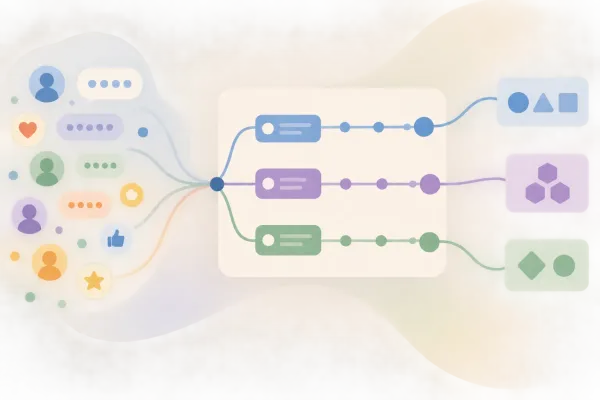
If your SaaS team has feedback spread across support conversations, surveys, and other channels, a specialized AI customer feedback analysis tool may help make a large volume of text easier to work with. Enterpret and Chattermill are examples to evaluate when the data is fragmented and text-heavy, as noted in AI Flow Review's customer feedback analysis tools roundup.
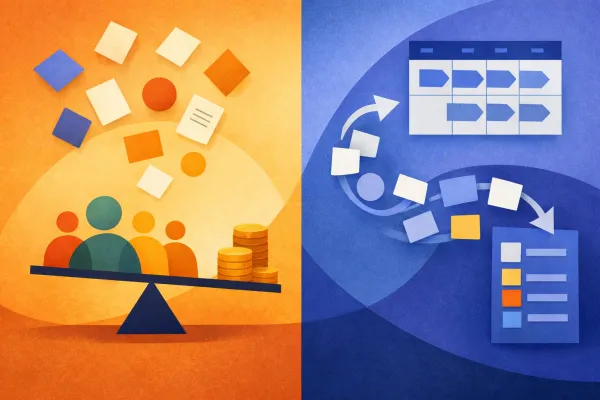
The right choice depends on what happens after analysis. Do you need help examining feedback across sources, or do you need a system to carry a product request through prioritization, release, and adoption? Those are related jobs, but they are not the same.
Shortlist: which tools should SaaS teams evaluate?
Based on the available information, Enterpret and Chattermill are the two named options to investigate for specialized analysis of high-volume, multi-source feedback. Managani is worth considering for a different need: connecting feedback to product-growth work. It is not presented here as an AI feedback analysis tool.
| Tool or approach | Consider it when | What to verify |
|---|---|---|
| Enterpret | Your team needs to analyze fragmented, text-heavy feedback from several sources | Which sources it can use, how it groups and presents feedback, and how your team checks the results |
| Chattermill | You have a similar need to make sense of feedback across sources at scale | How it handles your real data, preserves context, and fits your analysis workflow |
| Managani | You need feedback connected to decisions, roadmaps, changelogs, onboarding, and adoption work | Whether its connected product workflow addresses your handoffs; do not assume it replaces a specialized analysis tool |
This is a shortlist for evaluation, not a feature-by-feature ranking. The available evidence identifies Enterpret and Chattermill as specialized options for cross-source feedback analysis, but does not establish their current feature sets, integrations, pricing, or relative performance. Confirm those details with each vendor and test against your own feedback.
When does a specialized AI feedback analysis tool make sense?
A dedicated analysis tool is more relevant when useful customer input is difficult to interpret because it is spread across channels or arrives as a large volume of text. Teams may need to understand recurring problems, compare customer language, and surface patterns that are hard to spot by reading individual messages.
It may be less necessary if your feedback volume is manageable and the main problem is what to do with requests once they have been collected. In that case, a clear process for grouping, prioritizing, and following up may matter more than adding another analysis layer.
Ask your team:
- Do we have enough feedback to make manual review unreliable or slow?
- Is feedback spread across sources, with context lost as it moves between them?
- Can we name a product decision that better analysis would help us make?
- Who will check the analysis and decide what deserves action?
- Can we trace the decision back to the customer evidence?
If you cannot name a decision the tool should improve, start by clarifying the workflow. A larger volume of categorized feedback does not automatically create better product decisions.

How to evaluate Enterpret and Chattermill
Rather than comparing vendors by broad AI claims, run the same practical test in each product. Use a sample of real feedback that includes repeated requests, different descriptions of the same problem, and comments with useful account or product context.
1. Check the sources and context
List where relevant feedback currently lives. Ask vendors which of those sources they support and what information comes through with each item. A comment without its source, customer context, or surrounding conversation may be harder to assess than the original message.
Do not assume that a tool supports a particular integration or data format just because it analyzes multi-source feedback. Confirm coverage, import limits, and what happens when source data changes.
2. Examine how themes are presented
Ask the team to use the tool to investigate a real product question, such as why users struggle with a particular workflow. Check whether the results make it easier to find the underlying comments and distinguish related but different needs.
A theme is a prompt for investigation, not a product requirement. Similar words can describe different jobs, and multiple customers asking for the same feature does not explain why they need it. The team still needs to read the evidence and understand the use cases.
3. Test the path from analysis to decision
Choose one finding and follow it through your actual decision process. Can the person prioritizing the work see the evidence? Can they record why the issue matters, who it affects, and what other options were considered?
If moving a finding into planning requires copying text into another tool, include that handoff in the evaluation. It may be acceptable, but someone will need to maintain the connection.
4. Validate outputs with the original feedback
For each suggested theme or insight, inspect the source messages behind it. Look for mixed use cases, edge cases, duplicate reports, and comments that do not support the apparent pattern.
Agree on a review process before relying on analysis in planning. For example, a product manager might verify a theme with a small set of representative comments and bring the strongest examples to prioritization. The process should make it clear when a finding is ready to inform a decision and when more investigation is needed.
5. Calculate the operational cost
Include more than the subscription price. Estimate setup, data preparation, integration work, time spent reviewing results, and the ongoing effort needed to keep feedback sources usable. Then compare that cost with the time your team currently spends gathering and interpreting feedback.
Ask vendors for current pricing and plan limits directly. The available source does not establish current pricing for Enterpret or Chattermill.
What AI analysis does not replace
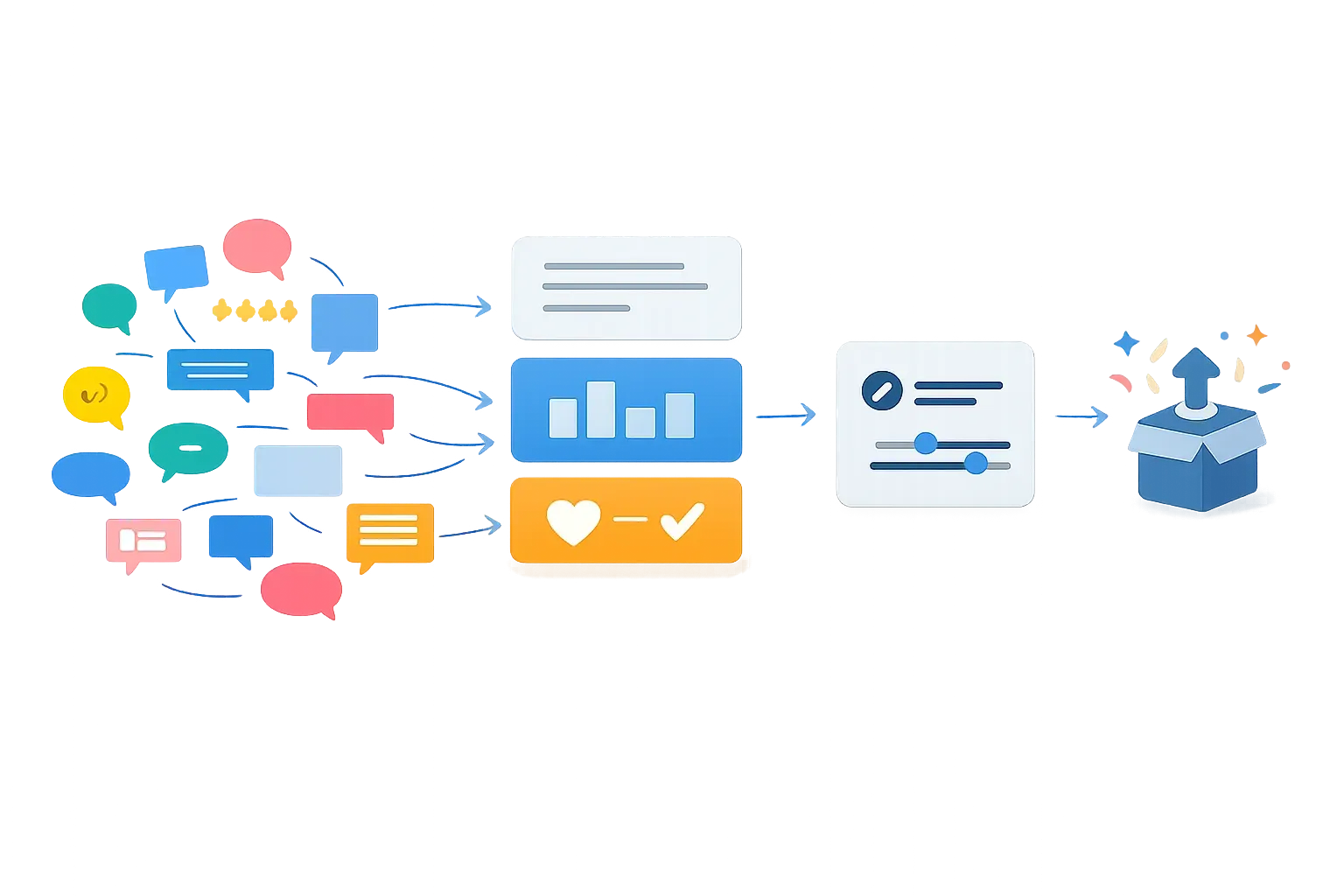
Analysis helps teams make sense of feedback. It does not decide which customer problem is worth solving, define the product response, or tell users when a change is available.
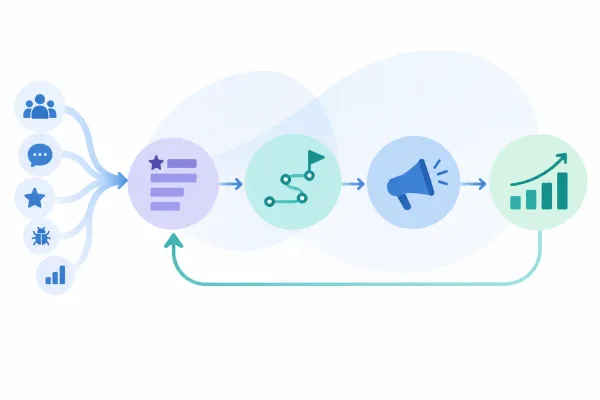
A complete product workflow might look like this:
- Collect feedback with its source and customer context.
- Group related reports and investigate the underlying need.
- Decide whether to act, and record the reasoning.
- Connect selected work to a roadmap or delivery process.
- Communicate the release to affected users.
- Check whether users adopted the change or still encounter friction.
If the first three steps are painful, a specialized feedback analysis tool may address part of the gap. If the team understands requests but loses context between the decision and the release, analysis alone will not solve it.
Managani connects feedback with roadmaps, changelogs, onboarding, in-app messaging, analytics, and adoption tracking. Its role is the product-growth workflow around customer signals, not a claim to replace dedicated AI analysis. Teams comparing approaches can also use this request-to-adoption test for customer feedback management to see where information gets lost after a request is captured.
A practical buying checklist
Before choosing a tool, make sure the evaluation answers these questions:
- Source coverage: Can it work with the feedback sources your team actually uses?
- Context: Does it preserve enough detail to understand who said what and where?
- Reviewability: Can your team inspect the original comments behind an apparent theme?
- Decision fit: Does the analysis help answer a concrete product question?
- Handoffs: How will findings reach prioritization, roadmap work, and customer follow-up?
- Ownership: Who will review the output and keep the workflow current?
- Cost: What are the total subscription, setup, and maintenance costs?
- Evidence: Can the team explain why a product decision followed from the feedback?
If your central issue is not analysis but keeping requests traceable through decisions and releases, see when a standalone feedback inbox stops being enough. For feedback found in public conversations rather than collected directly, social listening for B2B SaaS covers a related but distinct workflow.
Which option should you choose?
Evaluate Enterpret and Chattermill if your team has a large, fragmented body of text feedback and needs help analyzing it across sources. Test both with the same real data, verify current capabilities with the vendors, and check that people can inspect the evidence behind any finding.
Choose a workflow-focused approach when the bigger problem is turning customer input into decisions, releases, and adoption follow-up. Some teams may need both: specialized analysis for interpreting feedback and a connected product workflow for acting on what they learn. The right setup is the one that helps your team move from customer evidence to a clear, reviewable product decision without losing context along the way.