10 Best PostHog Alternatives for Product Teams in 2026

PostHog combines several product tools, including analytics, session replay, feature flags, and in-app guides. That breadth is useful, but it can make comparisons confusing: many alternatives replace only one part of PostHog, while others bundle several capabilities or focus on a different product workflow.
The right PostHog alternative depends on what you want to keep, what you want to replace, and where your team loses time today. If you mainly need behavioral analytics, start with analytics platforms. If you need feature management or onboarding, compare tools built for those jobs. If the bigger issue is that feedback, decisions, launches, and adoption tracking are disconnected, consider a product workflow platform instead.
The list below groups ten options by their primary fit. It is not a claim that each one matches every PostHog feature. Product packaging and plans change, so confirm current capabilities and pricing before switching. For another vendor's take on the category, see Amplitude's PostHog alternatives roundup.
PostHog alternatives at a glance
| Alternative | Consider it when... | Main focus |
|---|---|---|
| Amplitude | You want a dedicated product analytics platform | Product analytics |
| Mixpanel | You want to explore product events and user behavior | Product analytics |
| Heap | You want behavioral analysis with less manual event planning | Product analytics |
| Pendo | You want analytics alongside in-app product experiences | Analytics and guidance |
| Fullstory | Understanding user sessions and friction is the priority | Session replay and experience insights |
| Matomo | You want to assess an analytics option with more deployment control | Web and product analytics |
| June | You want analytics aimed at B2B SaaS teams | SaaS product analytics |
| Statsig | Feature management and experimentation are central needs | Feature management and experimentation |
| LaunchDarkly | You need a focused feature management platform | Feature flags and release controls |
| Managani | You need to connect customer signals with product adoption work | Product growth workflow |
1. Amplitude: for dedicated product analytics
Amplitude is worth evaluating when the main job is understanding product behavior: which actions people take, where they drop off, and how behavior differs across groups. A specialized analytics platform may be a better fit than an all-in-one tool if your team wants to focus its evaluation on analytics depth and the workflows built around it.
Before switching, map the reports and events your team relies on in PostHog. Check how each would be recreated, what instrumentation or data migration is needed, and whether your team can keep the relevant context connected to product decisions.
Best fit: teams prioritizing product analytics over a broad collection of product tools.
2. Mixpanel: for event-based product analysis
Mixpanel is another option for teams that want to analyze user actions and product journeys. Consider it when product managers and analysts need to investigate event patterns, compare behavior, and understand how users move through key workflows.
The practical question is not just whether the platform can produce a report. Check how easily your team can define meaningful events, maintain consistent tracking, and get from an observation to a product decision.
Best fit: teams that want an analytics-centered workflow for exploring product usage.
3. Heap: for behavioral analytics
Heap is a candidate for teams whose main need is understanding what users do in a product. It belongs on a shortlist when analysts and product teams want to investigate behavior without making every question depend on a carefully planned report in advance.
As with any analytics migration, validate how event data is captured and governed, what historical information can be carried over, and whether the resulting data supports the questions your team asks most often.
Best fit: teams that need to investigate user behavior and product journeys.
4. Pendo: for analytics paired with in-app experiences
Pendo is relevant when your team wants to consider product analytics alongside ways to guide users inside the product. It may suit teams that see measurement and in-app education as closely connected parts of their product experience work.
Compare the depth of the capabilities you actually use, not just the breadth of the feature list. For example, if onboarding is the main reason you're looking beyond PostHog, compare the tools against your real guidance needs, implementation constraints, and reporting workflow. Managani's overview of Pendo for product context in apps takes a closer look at that distinction.
Best fit: teams evaluating analytics and in-app product experiences together.

5. Fullstory: for session replay and product friction
Fullstory is worth comparing when the key question is what happened in a user session. Session replay and experience insights can help a team investigate friction that a summary metric alone does not explain.
Replay is not a substitute for every kind of analytics. Decide whether you need session-level investigation, event-based measurement, or both. Then check how findings from sessions get shared with the people prioritizing and fixing product issues.
Best fit: teams focused on diagnosing user experience problems through session-level context.
6. Matomo: for analytics and deployment control
Matomo is an option to assess when analytics deployment and data control matter alongside measurement. It may be relevant for teams comparing how analytics tools fit their privacy, hosting, and operational requirements.
Do not assume that deployment preferences alone make a tool a PostHog replacement. Check the product analytics questions you need answered, the implementation work involved, and which PostHog capabilities would still need separate tools.
Best fit: teams that want to evaluate analytics with deployment and data control in mind.
7. June: for B2B SaaS analytics
June is aimed at B2B SaaS product analytics. It can be a useful candidate if your team wants a product-focused analytics option and is comparing platforms in the context of SaaS usage and customer behavior.
Assess whether its current capabilities match the questions you need to answer, and how it fits with your existing product data and reporting habits. As with other focused analytics products, confirm which parts of PostHog it replaces and which require another tool.
Best fit: B2B SaaS teams looking for a product analytics-focused option.
8. Statsig: for experimentation and feature management needs
Statsig is worth a look when feature management or experimentation is a major reason you're considering an alternative. This is a different evaluation from choosing a standalone analytics tool: the team should focus on how it plans, controls, and evaluates product changes.
Write down the release and experimentation workflows you need to support, then verify which capabilities are available in the product and plan you are considering. Avoid treating an analytics report as a replacement for the controls your rollout process requires.
Best fit: teams whose evaluation is driven by experimentation and feature management.
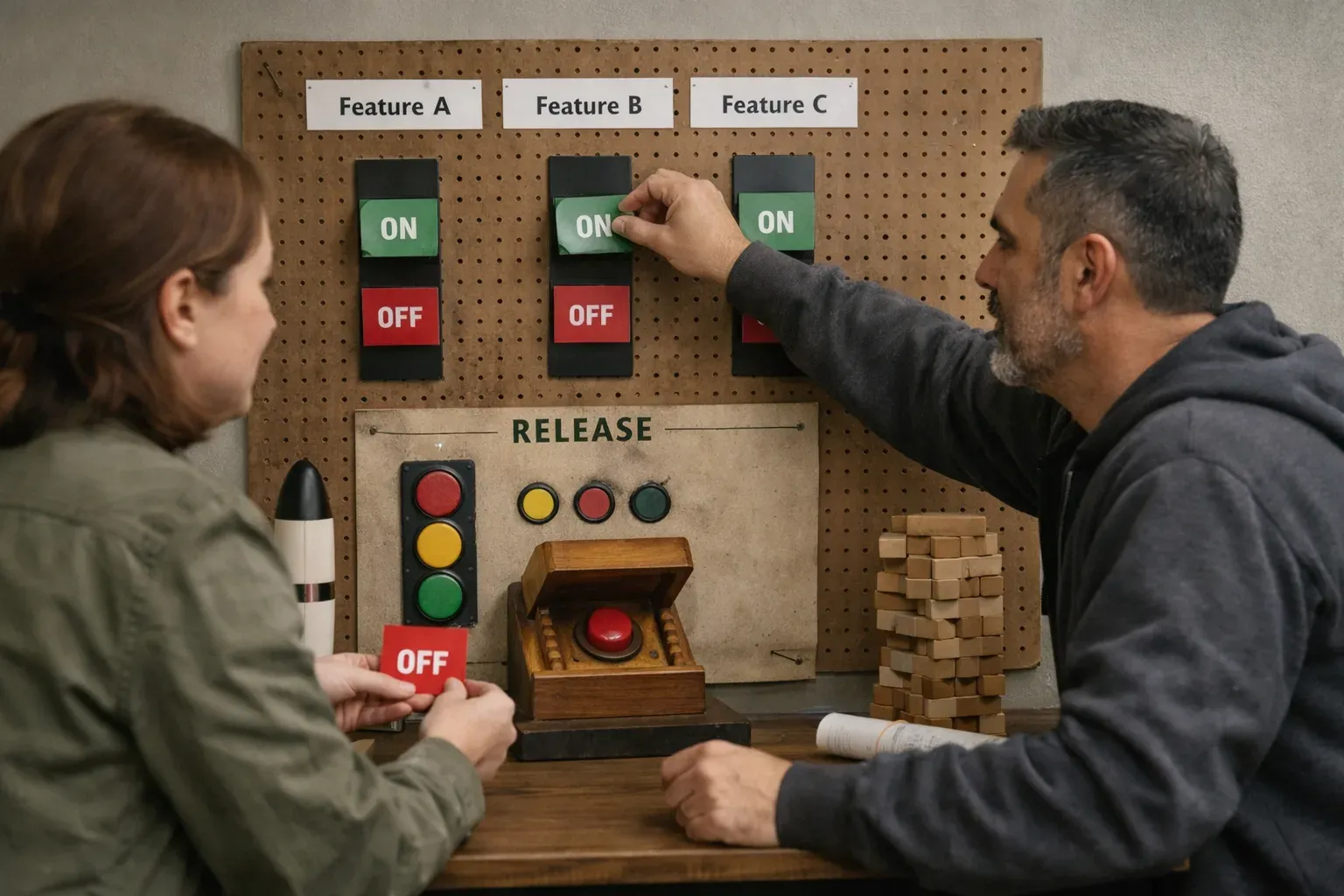
9. LaunchDarkly: for focused feature management
LaunchDarkly is a focused option when feature flags and release controls are the central need. It may make sense if the team wants to separate feature management from analytics rather than replacing PostHog with another multi-purpose platform.
That separation can be intentional, but it adds a handoff to evaluate. Make sure the people managing a rollout can still access the product context and outcome data they need to make decisions.
Best fit: teams looking for a dedicated feature management platform.
10. Managani: for connecting product growth work
Managani is not a like-for-like replacement for PostHog's analytics and developer tooling. It is relevant when the problem is broader than event analysis: customer feedback lives in one place, roadmap decisions in another, and release communication and adoption follow-up happen elsewhere.
Managani connects feedback, roadmaps, onboarding, changelogs, in-app messaging, analytics, and adoption tracking in one product experience platform for lean SaaS teams. The point is to connect the work around a product change: capture a request, decide what to do, communicate what shipped, guide users toward it, and track whether they adopted it.
If you mainly need deep event analytics, compare analytics-first products. If you want to reduce disconnected product-growth handoffs, explore product growth software for SaaS teams. You can also review Managani's approach to product analytics and customer context.
Best fit: lean SaaS teams that want customer signals, releases, guidance, and adoption work connected.
How to choose a PostHog alternative
Start with the PostHog job you cannot afford to lose. Separate your requirements into three groups:
- Must replace: The capability your team depends on, such as product analytics or feature flags.
- Must keep: Workflows or data that cannot be disrupted during a migration.
- Can change: Features you rarely use or would rather handle in a dedicated tool.
Then compare options against a few practical questions:
- Can the team answer its most common product questions?
- What instrumentation, data migration, or workflow changes will switching require?
- Will the alternative replace one PostHog capability or several?
- Does product context remain connected to decisions and follow-up?
- What new tools, integrations, or manual handoffs will the change introduce?
- Can the team validate current plan limits and total cost before committing?
A product analytics tool is not automatically a better choice just because it specializes in analytics. Likewise, an all-in-one platform is not automatically simpler if the team only uses a small part of it. Choose based on the workflows you need to preserve and the gaps you want to close.
Frequently asked questions
What is the best alternative to PostHog?
The best PostHog alternative depends on which capability you need. Compare analytics platforms for behavioral analysis, session replay tools for investigating user sessions, and feature management platforms for controlling releases. If your primary problem is disconnected feedback, roadmap, release, and adoption work, consider a product workflow platform rather than another analytics-only tool.
Can one PostHog alternative replace all of PostHog?
Some platforms cover multiple product jobs, but you should not assume one tool will replace every capability your team uses. List the PostHog features you rely on, map each to an alternative, and identify any integrations or separate tools the new setup will require.
Is Managani a direct PostHog replacement?
No. Managani is not a like-for-like replacement for PostHog's analytics and developer tooling. It is designed to connect product feedback, roadmaps, onboarding, changelogs, in-app messaging, analytics, and adoption tracking for lean SaaS teams.