Product Growth Software for SaaS Teams in One Workflow

Product growth software should help a team move from signal to shipped change to adoption without copying the same context across five tools. For lean SaaS teams, that means one workflow for feedback, surveys, roadmaps, changelogs, onboarding, in-app messaging, and product usage tracking.
That is the difference between a stack that stores information and a system that helps you learn from it. When a customer asks for something, the request should not disappear into a feedback inbox. It should stay connected to the roadmap decision, the release note, the in-app guidance, and the adoption data that shows whether the change mattered.
Managani is built for that connected loop. If you want the shorter version of the category, start with the product growth homepage and the feature overview. Then map your current stack against the jobs below.
What product growth software should include
Product growth software is not one tool with a broader label. It is a set of connected workflows that help a product team listen, decide, ship, and measure without losing context.
At minimum, it should include:
- Feedback capture so customers can submit requests with account context.
- Surveys so teams can ask a focused question at the right moment.
- Roadmaps so product decisions are visible and explainable.
- Changelogs so shipped work becomes discoverable.
- Onboarding and in-app messaging so users can reach the new value.
- Tracking so teams can see whether the change changed behavior.
Managani ties those pieces together in one workspace. Feedback can become roadmap input, roadmap work can become a changelog update, and the shipped change can trigger onboarding or in-app messaging that points users to the new behavior. Then tracking shows whether that behavior actually happened.
That connected flow matters because most growth problems are not caused by missing ideas. They are caused by broken handoffs.
What product growth software replaces
A useful way to evaluate product growth software is to ask what you can remove from the stack.
Managani is designed to replace a fragmented mix of:
| Common tool category | What it usually does | What happens when it is separate |
|---|---|---|
| Feedback tool | Collects requests, votes, and comments | Requests get detached from product decisions |
| Roadmap tool | Shows what is planned or shipped | Prioritization loses the customer context behind it |
| Changelog tool | Announces released work | Users hear about changes, but do not always adopt them |
| Onboarding tool | Guides first-run and activation flows | Guidance does not reflect what was just shipped |
| Lightweight tracking tool | Shows whether users used the feature | Usage data sits apart from the request and release story |
If that list feels familiar, the issue is usually not that each tool is bad. It is that each tool ends the story too early.
A team might capture feedback in one place, plan work in another, publish release notes somewhere else, and use a separate tool to guide adoption. Then the same customer story gets rewritten four times by hand. That slows the team down and makes it harder to answer basic questions like:
- Did the people who asked for this feature notice the release?
- Did users complete the action we wanted?
- Did the feature reduce the friction they reported?
- Which requests are worth prioritizing next?
Managani keeps those answers in the same system.
Why lean SaaS teams outgrow separate tools
Separate tools can work when a team is small and the workflow is simple. But once customer volume grows, the handoffs become expensive.
Common signs include:
- Feature requests arrive through Slack, support, email, and sales notes.
- Roadmap decisions require copying context from another system.
- Release notes go out, but customers still miss the new feature.
- Onboarding messages do not match the latest shipped work.
- Tracking tells you what happened, but not why the change mattered.
When this happens, the team starts spending more time reconnecting signals than acting on them. Product growth software should reduce that overhead.
Managani does that by keeping the evidence attached to the decision. A request can stay linked to the customers behind it. A roadmap item can stay connected to the demand that created it. A changelog entry can point users to the right action. Onboarding can guide the first successful use. Tracking can confirm whether the feature was adopted.
The workflow behind real product growth
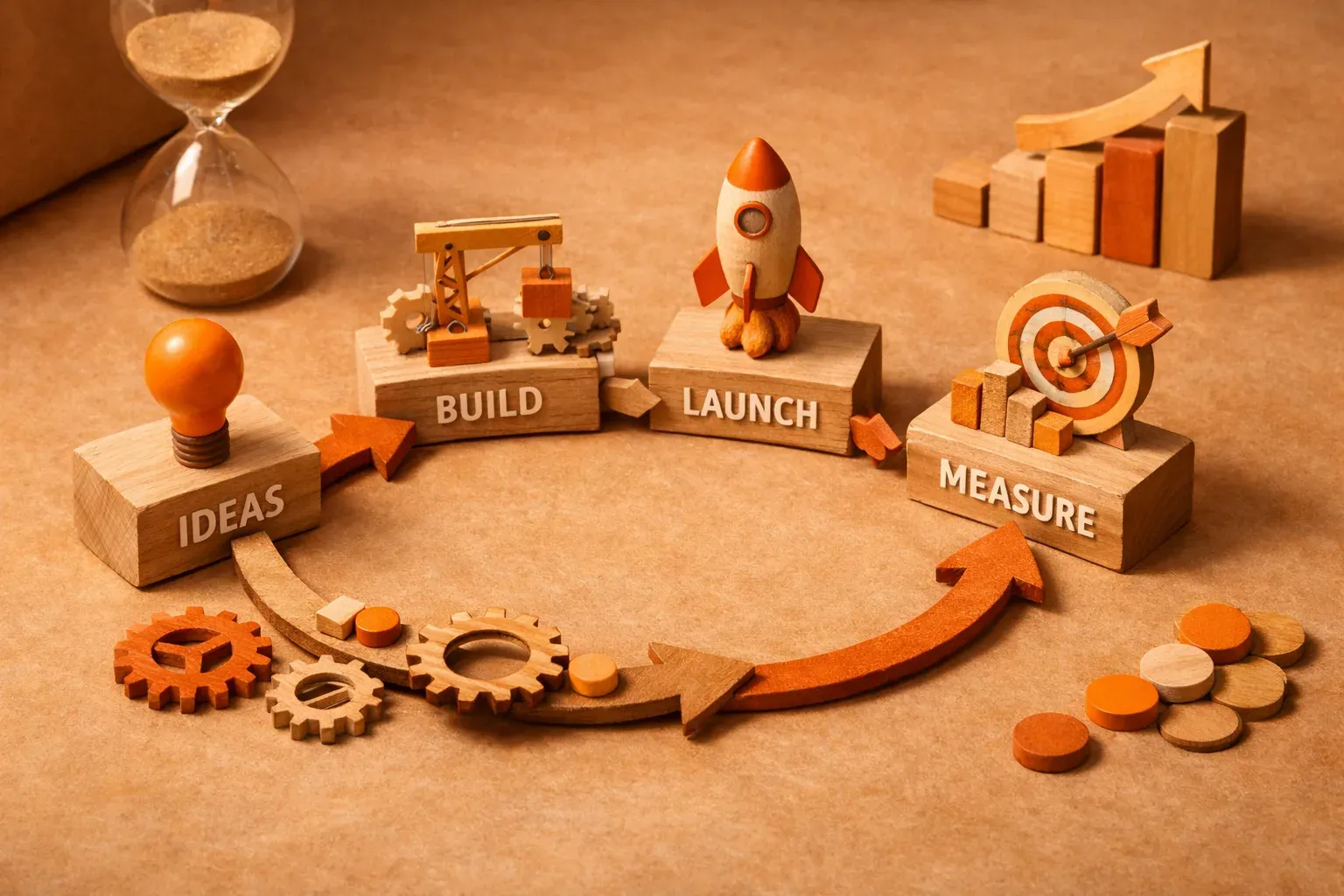
Product growth is not a single feature. It is a loop.
- A customer expresses a need.
- The team captures and groups that feedback.
- The team decides what to build and why.
- The team ships the change.
- The team tells users what changed.
- The team guides users to the new behavior.
- The team measures whether adoption improved.
That loop is the real product.
If you break it apart, you get disconnected tools and inconsistent follow-up. If you keep it together, every release becomes an input to the next decision.
Managani is built around that loop. For example, feedback and product roadmap work can stay connected, so a request does not lose its history once it moves into planning. Changelog updates can point users to the next action, so shipping is not the end of the story. SaaS onboarding can guide first-run activation, while product analytics shows whether the new flow actually changed behavior.
Feedback, surveys, and roadmap in one place
Most teams need both feedback and surveys, but they use them for different jobs.
Feedback is best when a customer is asking for something over time. Surveys are best when you need a response during a specific product moment. Roadmaps are where those signals become a decision.
Managani supports that flow without forcing it into separate products. With product feedback, teams can combine duplicate requests, keep the customer context attached, and explain status back to the people who asked. With in-app surveys, teams can ask a targeted question while the workflow is still fresh. Then the roadmap can reflect the evidence instead of a vague summary.
That matters because a request by itself is not a decision. A vote by itself is not a priority. And a survey response by itself is not a roadmap item.
The value is in the chain.
Changelogs and onboarding should work together
Shipping a feature is only part of the job. If users do not see it, understand it, or adopt it, the release did not finish the loop.
That is why changelogs and onboarding should sit close together.
A good changelog does more than announce that something changed. It explains the user outcome, shows the interface, links to instructions, and guides the affected audience to the first successful action. That is the purpose of Managani changelog.
Onboarding then takes the next step. It helps users reach value inside the product through checklists, tours, tooltips, highlights, and contextual prompts. Managani’s SaaS onboarding flow is built around first-run activation, not interface sightseeing.
This is the part many stacks miss. They announce the release, but they never help the customer use it. Then the team assumes the feature did not matter, when the real issue was that the user never reached it.
Lightweight tracking closes the loop
Tracking is what keeps product growth honest.
In Managani, tracking is about product usage and adoption, not broad website analytics. It helps teams see whether shipped features and in-app guidance actually changed behavior. That makes it easier to tell the difference between "we launched it" and "people now use it."
The product analytics view captures browser interactions such as clicks, form submissions, search terms, input focus, and input changes when that detail is appropriate for the product deployment. That is useful when a team needs to understand what users did after the release and where they may have gotten stuck.
This matters because adoption is the real signal of growth. A shipped feature that nobody finds is not helping the product. A guided feature that nobody uses is not finished. Tracking shows whether the loop actually produced value.

When a unified product growth platform makes sense
A unified product growth platform is worth considering when any of these are true:
- Your team repeats the same context in multiple tools.
- Customer requests are hard to trace after the initial conversation.
- Releases are shipped without a clean follow-up path.
- Onboarding needs to reflect product changes more often.
- Usage data exists, but it is disconnected from user intent.
- The stack is growing through add-ons instead of clarity.
That is the point where "one tool for feedback" and "another tool for onboarding" starts to create more work than it removes.
Managani is not trying to be everything outside the product loop. It is focused on the work that happens after a customer signal appears and before the next signal arrives. That includes collecting the request, deciding what it means, shipping the change, and helping users adopt it.
What to look for before you buy
If you are evaluating product growth software, ask these questions:
- Can feedback stay connected to the customers behind it?
- Can roadmap items show evidence without exposing every internal detail?
- Can changelogs point users to the next step, not just announce a release?
- Can onboarding respond to what was just shipped?
- Can tracking tell you whether the change affected adoption?
- Can surveys live close to the product moment they are meant to explain?
If the answer to those questions is no, the product may solve one job, but it probably will not solve the loop.
You can also review how Managani handles related workflows on customer feedback, roadmaps, changelogs, onboarding, and in-app messaging. Those pages show the category as connected product work rather than a pile of separate tools.
Frequently Asked Questions
What is product growth software?
Product growth software is a connected set of tools that helps a team collect feedback, prioritize work, ship changes, guide users, and measure adoption. The best version does not stop at capture or release. It keeps the full customer story intact from request to behavior change.
What does product growth software replace?
It can replace a feedback tool, a roadmap tool, a changelog tool, an onboarding tool, and a lightweight tracking tool. The goal is not fewer features for the sake of it. The goal is less handoff work and better context across the product loop.
Is product growth software only for large teams?
No. Lean SaaS teams often benefit the most because they feel tool sprawl earlier. When one or two people own product decisions, support, releases, and onboarding, a connected system saves a lot of manual copying.
How does product growth software help adoption?
It helps adoption by linking shipped work to the guidance users see next. A changelog can announce the change, onboarding can point users to the right action, and tracking can confirm whether users actually used the feature.
What should I look for first in a product growth platform?
Start with context retention. If the platform cannot keep feedback, roadmap decisions, release communication, and usage data connected, the rest of the stack will keep drifting apart.
The simplest test is this: if a customer asks for something, can the team follow that request all the way to shipped, adopted product behavior? If not, the software is missing part of the job.