User Feedback Tool vs. Product Feedback Tool: Choose by Job

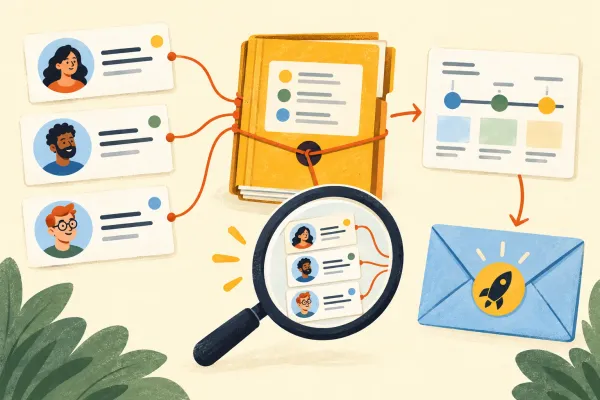
A customer asks for a feature in a support conversation. Another user describes the same problem in a survey, but suggests a different fix. Your product team needs to decide whether either request belongs on the roadmap and, later, tell those people what happened.
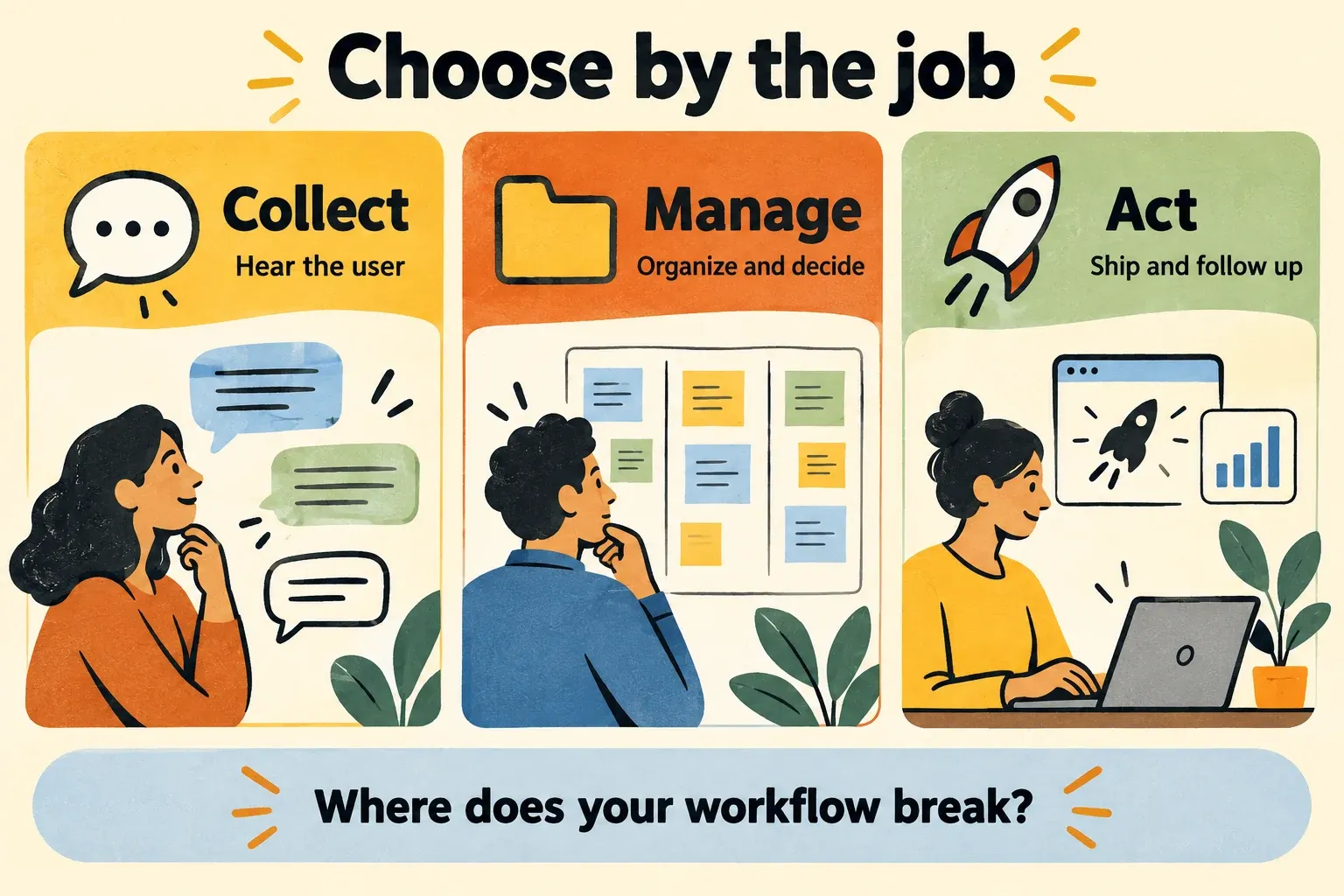
All three records are "feedback," but collecting them, managing them, and acting on them are different jobs. That is why a user feedback tool, a customer feedback management tool, and a product feedback tool can look similar in a feature list yet solve different problems. The useful question is not which label a vendor uses. It is where your team's work currently breaks down.
| Tool you're looking for | Primary job | Question it should help answer |
|---|---|---|
| User feedback tool | Collect input from people using the product | "What are users experiencing or asking for?" |
| Customer feedback management tool | Organize incoming input and give someone responsibility for reviewing it | "Which customers raised this, and what are we doing with it?" |
| Product feedback tool | Carry a product request through a decision, release, and follow-up | "What did we decide, what shipped, and did it help?" |
These are buying priorities, not rigid software categories. One product can cover all three. Start with the job you need to make dependable.
If you need more signals, start with collection
A user feedback tool helps people tell you what is working, confusing, or missing. Surveys and in-product prompts can catch experiences that never reach support. A feedback form can give users a clear place to submit requests.
The test is whether the tool captures enough context to make an answer useful. "Please add exports" is hard to assess on its own. "I need to send a monthly activity report to a client, but I cannot get the data out" gives the team a task, an audience, and a reason to investigate. Ask what the person was trying to do and leave room for an answer other than the feature they proposed.
Collection alone may be enough if a founder reviews every response and can still remember the conversations behind them. It becomes less useful when the same problem arrives through several channels and nobody can tell whether the entries describe one need or several. At that point, you need a way to group and review signals, not another form.
If requests get lost, focus on management
A customer feedback management tool addresses the work after input arrives. It should help a team preserve who raised an issue, group related reports, categorize the underlying problem, assign a reviewer, and record what happens next.
Consider two requests for "better permissions." One comes from an administrator who cannot restrict billing access. The other comes from a teammate who wants to share one project without exposing the rest of an account. Counting them as two votes for the same feature could lead to the wrong decision. Good management keeps the original context available while the team decides whether the requests belong together.
This is an operational distinction. A shared inbox may collect both messages, but it does not necessarily provide a product-team review process. A roadmap board may show a permissions item, but it may not show the customer problems behind it. If those handoffs are your main pain point, read the more detailed guide to customer feedback management in one workflow. This article stays focused on choosing the right kind of tool.
If the trail ends at the roadmap, follow the product outcome
A product feedback tool needs to do more than turn requests into feature ideas. The team should be able to connect a customer problem to a decision, relate that decision to roadmap work, and follow up when the work ships. Otherwise, "planned" becomes the last meaningful status a customer sees.
Shipping is not always the end of the story. The requested change may be hard to find, solve only part of the problem, or serve a different user than the one who raised it. Release communication tells people what changed; product-usage tracking can show whether eligible users tried the new behavior. Neither replaces a conversation with the customer, but together they make follow-up more informed.
For example, if administrators requested a simpler way to invite teammates, a useful post-release check is not just whether the invite screen was viewed. It is whether the intended administrators completed an invite. The distinction between an event and an adopted behavior is covered in tracking events that turn shipped features into adoption data.
Test tools with one request from your own backlog
Feature checklists rarely show how much work a tool leaves between teams. Pick a real request that has appeared more than once, then walk it through a candidate product. Use the same request for each trial.
- Enter two versions of the signal. Use different channels or different descriptions of the same problem. Can you keep each person's words and account context while grouping the related need?
- Assign the next action. Can someone own the review, distinguish a product request from a support issue, and record a decision without marking every suggestion "planned"?
- Find the evidence later. When you open the proposed roadmap item, can you see why it exists and who is affected? If you cannot, the team will have to reconstruct the case during prioritization.
- Continue past shipping. Can you identify the people who should hear about the release and connect the change to an outcome worth checking? Note which steps require a manual export or a second system.
- Price and operate the whole path. Count the tools, seats, setup work, and recurring handoffs needed to run that process. A focused tool may still be the right choice if those handoffs are easy and reliable.
This trial also exposes cases where feedback software is the wrong purchase. If the team already manages requests well but cannot investigate product behavior, a dedicated analytics tool may address the gap better. If requests are clear and decisions are documented but nobody can deliver the work, replacing the feedback system will not fix delivery capacity.
Where Managani fits
Managani is designed for teams that want the request and the work around it connected. Its product-growth workflow brings feedback capture and categorization together with roadmap planning, changelog updates, in-app guidance, and product-usage tracking. That makes it most relevant when your problem spans management and follow-up, rather than collection alone. Its approach to feedback beyond a standalone inbox explains that broader use case.
There is an important deployment distinction if open source is part of your decision. Managani is currently offered as a managed beta. According to its open-source plan, publication of the complete application under AGPLv3 and documented self-hosting are planned for after beta; they are not current self-hosting options. Evaluate the workflow available now separately from that future plan.
Choose a focused user feedback tool if you only need a better way to hear from users. Choose for customer feedback management if signals already arrive but lack ownership and context. Choose a product feedback workflow if the repeated failure is losing the thread between a request, a roadmap decision, a release, and what users do next.
Frequently asked questions
Is a user feedback tool the same as a customer feedback management tool?
Not necessarily. A user feedback tool primarily helps collect input, often from people inside the product. A customer feedback management tool also helps the team organize that input, retain customer context, assign responsibility, and track a response. Some tools do both; the distinction is the job you need them to perform.
Does a product feedback tool need usage tracking?
Not every team needs usage tracking in the same product. But if you want to know whether a shipped change helped, decide how you will check before buying. That might mean connecting the request to a product-usage event and following up with affected customers. A release announcement alone proves that you communicated a change, not that users adopted it.