What Is Product Growth? A Practical Guide for SaaS Teams

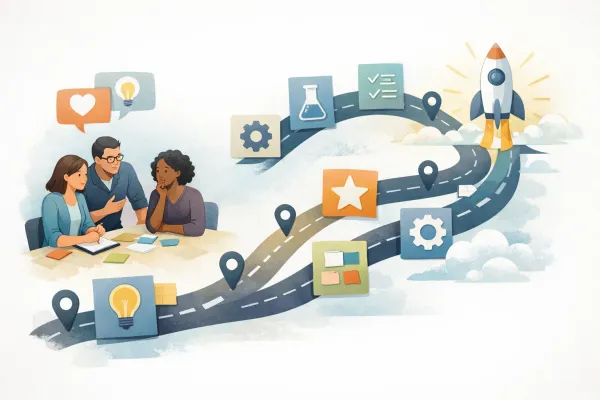
Product growth is how a SaaS team turns customer signals into product decisions, product changes, and measurable adoption. It is not a campaign function. It is an operating system for learning what users need, shipping the right work, and helping users reach value faster.
This guide explains what product growth means, why fragmented tools slow it down, and how teams can build a feedback-to-roadmap-to-release loop. It also covers how a product growth platform like Managani brings feedback, roadmap, changelog, onboarding, chat, surveys, and tracking into one workflow.
What Is Product Growth?
Product growth is the process of growing a product by improving activation, retention, expansion, and customer value through product-led workflows. It connects customer feedback, product planning, onboarding, release communication, and usage tracking.
A strong product growth system answers four questions:
- What are users asking for?
- Which requests matter most?
- What is the team building next?
- Did the shipped change improve adoption, retention, or satisfaction?
Product growth is different from growth marketing. Growth marketing brings users into the funnel. Product growth improves what happens after users arrive.
Why Traditional Product Growth Workflows Break
Most SaaS teams do not fail because they lack ideas. They fail because signals are scattered across too many tools.
Feedback sits in Slack, Intercom, HubSpot, email, support tickets, sales notes, and call recordings. Roadmaps live in Trello, Notion, Jira, Linear, or a spreadsheet. Changelogs are handled manually. Onboarding tours sit in another tool. Surveys and product analytics sit somewhere else.
This creates product debt before the team has enough data to make confident decisions.
Common problems include:
- Lost feedback: User requests disappear in chat threads, support tickets, and sales notes.
- Weak prioritization: Teams prioritize based on loudest voices instead of grouped demand.
- Disconnected roadmaps: Roadmap items are not tied back to customer requests.
- Manual release communication: Users do not know when requested features ship.
- Poor onboarding visibility: Teams cannot connect activation problems to product guidance.
- Tool sprawl: Feedback, roadmap, changelog, surveys, tours, chat, and tracking require separate tools and invoices.
- Enterprise pricing pressure: Many product growth tools are priced for larger companies before startups can justify the cost.
The result is slow learning. Teams ship, but they do not always know whether they solved the right problem.
The Product Growth Transformation
Product growth improves when teams stop treating feedback, roadmap, onboarding, and releases as separate workstreams. The better model is a connected loop.
From Scattered Feedback to Customer Feedback Management
Customer feedback management means collecting, organizing, prioritizing, and acting on feedback from users and customers.
A working feedback process should support:
- Idea capture
- Bug reports
- Feature requests
- Praise and objections
- User voting
- Internal notes
- Public and private boards
- Request grouping
- Status updates
- Links to roadmap items and releases
Without structure, feedback becomes noise. With structure, it becomes product input.
From Generic Boards to a Product Roadmap
A Trello roadmap can work for early brainstorming. It breaks down when the team needs to connect roadmap cards to real customer demand.
Teams usually outgrow Trello for roadmap planning when they need:
- Customer-linked requests
- Public roadmap views
- Internal prioritization
- Voting and comments
- Status changes
- Release notes
- Feedback closure
- Product discovery history
A dedicated roadmap gives the team a record of why work exists, who asked for it, and what changed after it shipped.
From Shipping Features to Closing the Loop
Shipping is not the end of product growth. Closing the loop is what turns delivery into trust.
A good loop looks like this:
- A user submits feedback.
- The team tags and groups related requests.
- The team prioritizes based on demand, strategy, and effort.
- The request becomes a roadmap item.
- The team ships the change.
- The changelog announces the release.
- Users who asked for it are notified.
- Product tracking shows whether adoption improved.
This creates visible progress for users and better decision quality for the team.
From One-Time Setup to SaaS Onboarding
SaaS onboarding is the process of helping users reach first value inside the product. It usually includes first-run guidance, product tours, highlights, in-app messages, support chat, and activation tracking.
Strong SaaS onboarding tools help teams guide users through key actions, not just show a generic walkthrough.
Useful onboarding patterns include:
- Welcome flows for new accounts
- Product tours for key features
- Highlights for important UI elements
- In-app chat for help during setup
- Surveys for friction points
- Activation tracking for completed actions
Onboarding is part of product growth because activation problems are product problems.
From Tool Stack to Product OS
A product OS is a connected system for managing feedback, roadmap, changelog, onboarding, communication, and tracking in one place. It gives product teams one workflow for understanding users, deciding what to build, guiding adoption, and communicating releases.
A product OS typically includes:
- Feedback management
- Roadmap planning
- Changelog publishing
- In-app chat
- Product tours
- Feature highlights
- Surveys
- Tracking scripts
- User and account context
For startup product growth, this matters because small teams cannot afford tool sprawl. They need fewer systems, faster feedback loops, and lower operational drag.

Where Product Growth Creates Value
Product growth is not theoretical. It improves specific workflows that SaaS teams handle every week.
1. Turning Customer Feedback Into Roadmap Decisions
A product feedback tool should do more than collect suggestions. It should help the team understand demand.
Example workflow:
- Users submit requests through a public or private feedback board.
- Other users vote or comment.
- The product team tags requests by theme, segment, plan, or use case.
- Similar requests are grouped.
- High-value themes become roadmap candidates.
- Roadmap items stay linked to the original feedback.
This prevents the team from treating every request as equal. It also gives founders and product managers evidence for why a feature matters.
2. Managing Startup Product Growth With a Lean Loop
Startup product growth needs speed and focus. Early teams usually do not need a complex enterprise suite. They need one loop that keeps them close to users.
A lean product growth loop looks like this:
- Collect feedback from users and prospects.
- Group requests into themes.
- Prioritize what supports activation, retention, or revenue.
- Publish a roadmap so users see direction.
- Ship the smallest useful version.
- Announce it through a changelog.
- Guide users with tours, highlights, or in-app chat.
- Track whether behavior changes.
This replaces a fragmented stack with a single operating rhythm.
3. Improving SaaS Onboarding and Activation
Many teams lose users before they understand the product. A better onboarding flow helps users complete the first action that proves value.
Examples:
- A project management SaaS guides users to create their first workspace.
- A reporting tool highlights where to connect the first data source.
- A developer tool uses in-app chat to answer setup questions.
- A B2B platform runs a quick survey when users abandon setup.
The goal is not to show every feature. The goal is to reduce time to value.
4. Replacing a Trello Roadmap With a Feedback-Linked Roadmap
Trello works as a general board. It does not handle the full product growth loop.
A dedicated roadmap improves the workflow by connecting:
- Requested features
- Customer votes
- Internal priority
- Public status
- Release communication
- Follow-up messages
This matters when customers ask, “What happened to the feature I requested?” The team should not have to search across Trello, Slack, and a changelog draft to answer.
5. Using Changelogs to Drive Adoption
A changelog is not just a release log. It is a product growth channel.
Good changelogs help teams:
- Announce shipped features
- Show customers that feedback is being acted on
- Reduce repeat support questions
- Drive users back into new functionality
- Support sales and customer success conversations
A changelog works best when it is connected to the roadmap and feedback system. That connection turns shipped work into visible customer progress.
6. Choosing Product Growth Tools Without Building a Bloated Stack
Product growth tools usually fall into separate categories:
| Category | Common Use | Risk When Separate |
|---|---|---|
| Feedback management tool | Capture requests and votes | Feedback gets disconnected from delivery |
| Roadmap tool | Plan product work | Roadmap lacks customer context |
| Changelog tool | Announce releases | Updates become manual and incomplete |
| SaaS onboarding software | Guide users in-app | Onboarding insights stay isolated |
| Survey tool | Collect user input | Responses are not tied to roadmap decisions |
| Product analytics | Track behavior | Data lacks qualitative context |
| In-app chat | Support users | Product insights stay in support threads |
The better approach is to connect these workflows. That is where product growth software becomes useful.
How Managani Powers Product Growth
Managani is an open source product growth platform built from founder experience, for founder-led teams. It brings the core product growth workflow into one system without the enterprise tax.
Instead of running feedback here, roadmap there, changelog somewhere else, and onboarding in another paid tool, Managani gives teams one connected workspace.
Key capabilities include:
- Feedback management: Capture ideas, bugs, praise, and requests from users.
- Voting and prioritization: Understand demand before committing roadmap space.
- Roadmap planning: Connect planned work to real customer signals.
- Changelog publishing: Announce shipped work and close the loop.
- SaaS onboarding tools: Use tours, highlights, and in-app guidance to improve activation.
- In-app chat: Support users while they are inside the product.
- Surveys: Collect structured input from users at key moments.
- Tracking scripts: Connect user behavior to product growth decisions.
- Open source foundation: Reduce lock-in and keep control over your product growth system.
Managani is designed as a product OS for teams that want the workflow of a larger product organization without buying five separate tools.
For teams evaluating options, useful next pages include:
- Features for the full product growth workflow
- Open Source for the AGPL model and self-hosting direction
- Compare for alternatives and stack consolidation
- Pricing for plans without enterprise-first packaging
- Why Managani for the founder-led product philosophy

Best Practices for Implementing Product Growth
A product growth system only works if the team uses it consistently. Start with the workflow before adding more process.
- Define your product growth loop: Map how feedback becomes roadmap work, how releases are announced, and how adoption is tracked.
- Centralize customer feedback: Pull requests out of Slack, email, support tickets, and spreadsheets into one feedback management tool.
- Group feedback by theme: Avoid treating every request as a separate item. Group similar requests so demand becomes visible.
- Tie roadmap items to evidence: Every roadmap item should connect to user feedback, business value, onboarding friction, or usage data.
- Close the loop after shipping: Use changelog updates and user notifications to tell customers when requested work goes live.
- Measure activation and adoption: Use onboarding flows, highlights, surveys, and tracking to see whether users actually adopt what you ship.
- Reduce tool sprawl early: Startup product growth is easier when feedback, roadmap, changelog, onboarding, and communication share context.
How to Build a Product Growth Loop
Use this process if your team is starting from scattered tools.
- Collect feedback in one place: Create a central feedback board for feature requests, bugs, objections, and praise.
- Tag and group requests: Organize feedback by theme, customer segment, plan, use case, or lifecycle stage.
- Prioritize roadmap candidates: Compare demand, effort, strategic value, and revenue impact.
- Publish the roadmap: Share what is planned, in progress, and shipped so users understand direction.
- Ship and announce updates: Use a changelog to communicate product changes clearly.
- Guide users to value: Add tours, highlights, chat, and surveys where users need help.
- Track behavior change: Review whether activation, engagement, or retention improved after the release.
The goal is not more process. The goal is faster learning with less manual coordination.
FAQ
What is product growth?
Product growth is the process of improving activation, retention, expansion, and customer value through product-led workflows. It connects feedback, roadmap planning, releases, onboarding, and usage tracking.
What is a product OS?
A product OS is a connected system for managing feedback, roadmap, changelog, onboarding, chat, surveys, and tracking. It helps teams run product growth from one workflow instead of separate tools.
What is the difference between product growth and growth marketing?
Growth marketing focuses on acquiring and converting users through campaigns. Product growth focuses on improving the product experience so users activate, adopt, retain, and expand.
What product growth tools does a SaaS team need?
Most SaaS teams need feedback management, roadmap planning, changelog publishing, onboarding flows, in-app chat, surveys, and product tracking. A unified product growth platform connects these workflows so teams do not lose context.
Why do teams outgrow Trello for roadmap planning?
Teams outgrow Trello for roadmap planning when they need customer-linked feedback, voting, public roadmap views, release communication, and feedback closure. Trello can organize cards, but it does not manage the full feedback-to-roadmap loop.
What is customer feedback management?
Customer feedback management is the process of collecting, organizing, prioritizing, and acting on user input. It includes feedback capture, tagging, voting, request grouping, roadmap linkage, and follow-up after shipping.
What is SaaS onboarding software?
SaaS onboarding software helps users reach value inside a product through tours, highlights, in-app messages, chat, surveys, and activation guidance. It supports product growth by reducing early drop-off and improving adoption.
Is an open source product OS safe for SaaS teams?
An open source product OS can be safe for SaaS teams when the project is maintained, transparent, and deployed with sound security practices. Managani’s open source model gives teams more control and reduces lock-in compared with closed enterprise tools.
Product Growth Needs a Connected System
Product growth works when customer signals lead to better product decisions, faster shipping, clearer communication, and stronger adoption. It breaks when feedback, roadmap, changelog, onboarding, chat, surveys, and tracking are split across disconnected tools.
Managani gives SaaS teams an open source product growth platform for that full loop. If your team is ready to replace tool sprawl with one product OS, try Managani and build your feedback-to-roadmap-to-release workflow in one place.